


A rare rivercane habitat in Yancey County has been permanently protected, ensuring both ecological preservation and renewed access for Eastern Band of Cherokee Indians (EBCI) artisans who rely on the plant for traditional weaving.
The Southern Appalachian Highlands Conservancy (SAHC), with support from the EBCI Office of Fisheries and Wildlife Management and the North Carolina Land and Water Fund, finalized protection of the 433-acre Cane River Confluence property, located where the Toe and Cane Rivers join to form the Nolichucky. The site holds both cultural significance and ecological importance, including one of the few remaining large rivercane patches in the Southeast.
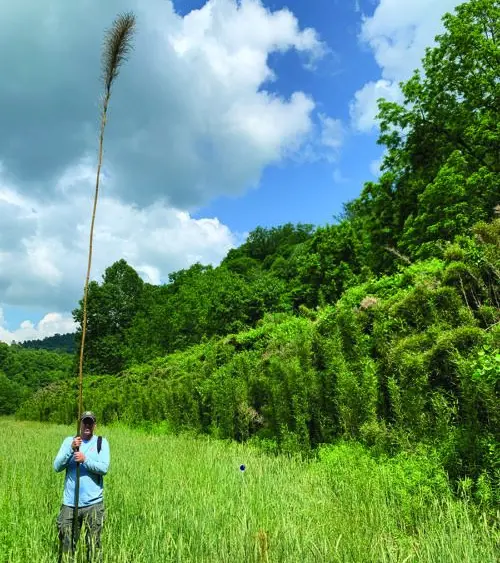
Caleb Hickman, supervisory biologist with EBCI Fisheries and Wildlife Management, said the newly protected land will allow sustainable harvesting of rivercane for Cherokee artisans under a forthcoming management plan. He noted the patch’s exceptional size and quality make it extremely valuable for traditional craft. “We’ve lost 98 percent of rivercane throughout its range in the Southeast,” Hickman said. “For restoration purposes, scientific purposes, and artisan purposes, the patch is super important.”
The rivercane stand, previously accessed by artisans in 2021 through the Revitalization of Traditional Cherokee Artisan Resources (RTCAR), has also been the subject of university research evaluating how traditional harvest practices affect patch health.
SAHC Land Protection Director Michellle Pugliese called the property a high priority for conservation due to its mature and early-successional forests, wildlife habitat, water-quality benefits, and the cultural value of the rivercane. Although SAHC now owns the land, additional grant funding is still being finalized to repay acquisition loans. The organization intends to keep the property as a long-term preserve named the Cane River Confluence.
As part of the state funding requirements, a conservation easement will be placed on the property, permanently preventing development and subdivision. The State of North Carolina will hold the easement, while SAHC will monitor and manage compliance.
Hickman emphasized the rarity of the site and the need for careful management: “It’s basically a large single organism connected underground. The management of that site will be super important to do it right.”
The protection of the Cane River Confluence marks a significant step toward safeguarding an endangered ecosystem while supporting the cultural practices of Cherokee artisans for generations to come.
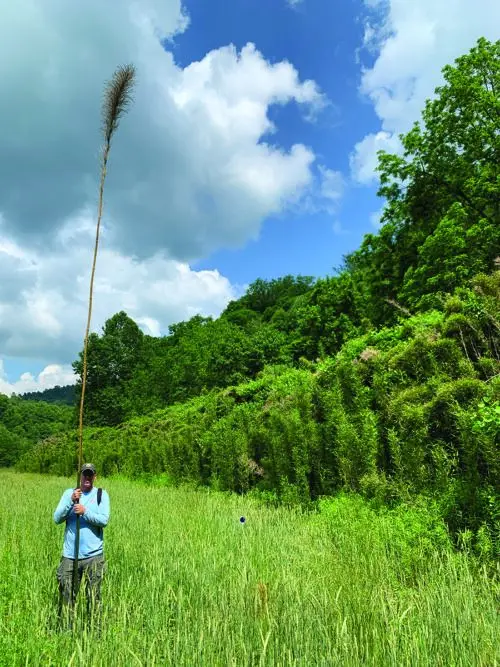
Caleb Hickman, EBCI Fisheries and Wildlife Management supervisory biologist, is shown at the 433-acre Cane River Confluence property in Yancey County. (Photos courtesy of Southern Appalachian Highlands Conservancy)