


Deeply rooted in the culture and history of Southern Appalachia, native, wild leeks, commonly known as ramps, are prized by locals for their culinary and medicinal properties. An alarming discovery underscored the growing threat to this native plant’s survival.
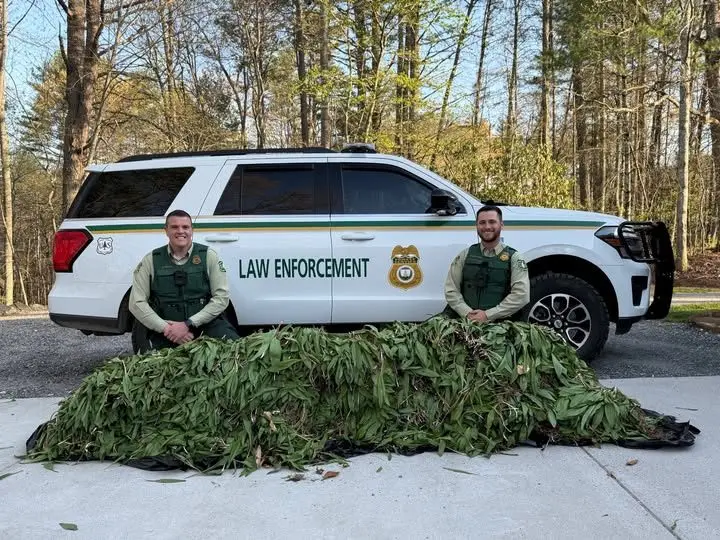
U.S. Forest Service Law Enforcement confiscated approximately 425 pounds of illegally harvested ramps on the Nantahala National Forest. This marks one of the largest ramp seizures in recent years within the National Forests in North Carolina.
Their discovery followed reports from concerned forest visitors, who noticed individuals leaving the forest with a suspiciously large quantity of ramps. A patrol of the area led to the uncovering of a large-scale poaching operation that posed serious risk to fragile native plant populations and violated federal regulations protecting natural resources on public lands.
“We take reports of illegal harvesting seriously, and because of their quick response, the Nantahala National Forest Officers were able to prevent further negative impacts to ramp populations on the Nantahala,” said Law Enforcement Officer, Victoria Stackhouse. “The overwhelming number of ramps that were recovered from illegally harvesting, highlights why it is important for the public to report suspicious activities.”
Ramps (Allium trioccum) grow slowly and can take up to 7 years to mature. In some areas populations have already declined. Currently, foragers are allowed to harvest up to 3lbs or 1 gallon of ramps for personal use in some parts of the forest. Commercial permits are available at ranger districts for greater quantities. Excessive and unlawful harvesting, however, could lead to further limits in the future.
“Ramps have been harvested sustainably by Appalachian communities for generations,” said Maria Dunlavey, a Forest Service botanist. “But what we are seeing here is a shift to irresponsible and self-serving overharvesting on a scale these ecosystems struggle to recover from.”
While the U.S. Forest Service issues limited commercial permits for ramp harvesting in some districts, no such authorization was granted in these cases.
As a result of enforcement actions, the individuals alleged to have been part of the poaching operations received approximately 70 Class B misdemeanor charges, each carrying a maximum penalty of up to 6 months in jail and/or fines up to $5,000 per charge. The individuals will also not be able to purchase a forest products removal permit for a minimum of a year. The case remains under further investigation.
Rather than let the seized ramps go to waste, Forest Service officers worked with local partners to donate them to the community, including fire departments, police departments, and area churches.
Anyone with information regarding unauthorized harvesting or suspicious activity can contact local ranger district offices.
“This isn’t just about one plant,” added Dunlavey. “It’s about preserving a heritage and a habitat. Without proper care, we risk losing both. These public lands and resources are ours to steward and maintain for generations to come.”
The National Forests in North Carolina urges the public to follow responsible foraging practices, respect collection limits, and report any suspicious activity to local authorities.
Visitors can learn more about responsible foraging, permits and rules surrounding forest products on the National Forests in North Carolina here: https://www.fs.usda.gov/r08/northcarolina/permits
Photo: LEOs posing next to 425lbs of illegally collected ramps. USDA forest Service photo by Tori Stackhouse.